


4 Wheel Drive Service

Professional service presentation

First service offering

Second service offering

Third service offering

Mechanic inspecting the underside of a vehicle with a flashlight in an auto repair shop
May 20, 2026
Learn how much a North Carolina State Inspection costs, what’s included, emissions testing requirements, and why drivers trust Chapel Hill Tire for fast, reliable inspections.

Mechanic using a power tool to remove a car wheel lug nut in a garage
April 29, 2026
Chapel Hill Tire now offers Continental tires with no installation cost. Enjoy premium brands, transparent pricing, and a better tire buying experience.

Drive-thru bank building with glass entrance and a yellow service car parked outside.
April 29, 2026
Compare Chapel Hill Tire vs dealerships and discover a better tire buying experience with transparent pricing, premium brands, and no installation costs.

A white Subaru Outback parked on a dirt path in a forest of tall, slender pine trees.
March 20, 2026
Experiencing uneven tire wear or pulling in your Subaru Outback? Learn the signs of alignment issues and get expert wheel alignment service at Chapel Hill Tire.
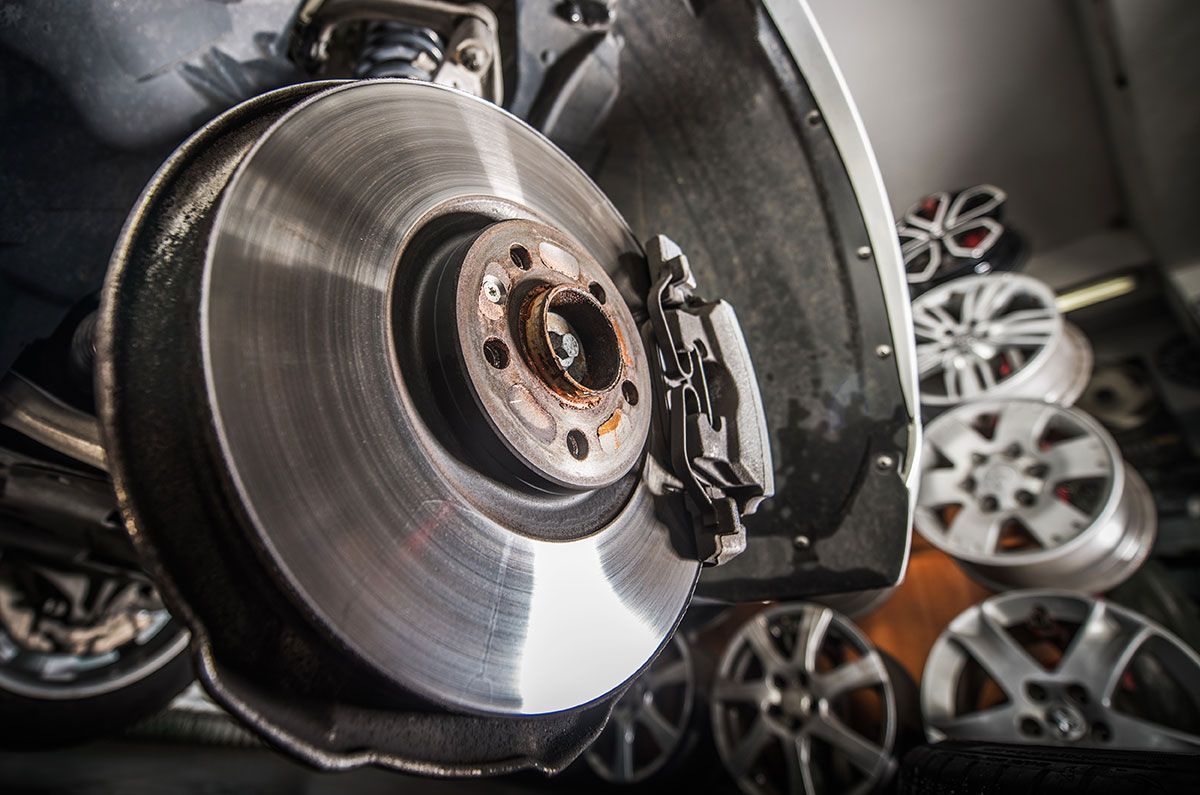
A car brake disc and caliper assembly in a garage, with several spare alloy wheels stacked in the blurred background.
March 20, 2026
Replacing brake pads? Learn when you need new rotors, why modern vehicles often require both, and get expert brake service at Chapel Hill Tire.

Cars buried under heavy snow on a street, winter scene.
By Chapel Hill Tire March 10, 2026
Cars from northern or coastal states often face salt-related rust and corrosion. Learn why sharing your car’s history helps your mechanic inspect, diagnose, and repair it more accurately.

Mechanic in blue overalls on phone, holding clipboard, near a reddish-orange car inside a garage.
By Chapel Hill Tire February 17, 2026
Learn how to describe car noises clearly, including what it sounds like, when it happens, and where it comes from, so your technician can diagnose and fix it faster.

Black BMW X3 SUV driving on a road next to a building.
February 11, 2026
Automakers are adding subscription fees for features like heated seats and remote start. Learn how vehicle subscription models affect ownership, costs, and maintenance.

Black Ford F-150 pickup truck parked in a car lot with other vehicles, sunny day.
February 9, 2026
Learn the most common Ford F-150 suspension problems, warning signs to watch for, and when to schedule professional suspension repair at Chapel Hill Tire.

White Nissan Sentra parked in a paved lot, with a yellow car in the background; palms trees and a building are visible.
January 27, 2026
Learn how often a Nissan Sentra needs an oil change, what affects oil life, and when to service it. Get expert oil change service at Chapel Hill Tire.


4WD Services FAQ

  • What is a 4-wheel drive service, and why is it important?

    A 4-wheel drive service involves inspecting, maintaining, and servicing the components of your vehicle’s 4WD system, including the transfer case, differentials, and drive shafts. Regular service ensures your 4WD system operates smoothly, providing better traction, performance, and safety on various terrains.
  • How often should I service my 4-wheel drive system

    The service interval for a 4WD system varies by vehicle and usage but is generally recommended every 30,000 miles or as specified in your vehicle’s owner’s manual. More frequent service may be needed if you regularly drive off-road, tow heavy loads, or operate in extreme conditions.
  • What does a 4-wheel drive service include?

    A typical 4WD service includes inspecting and replacing fluids in the transfer case and differentials, checking the drive shafts, U-joints, and CV joints, and inspecting seals and gaskets for leaks. This ensures the system remains lubricated, clean, and free of contaminants that can cause damage.
  • What are the signs that my 4-wheel drive system needs service?

    Common signs that your 4WD system needs service include difficulty shifting into or out of 4WD mode, grinding noises, vibrations when driving, fluid leaks, or warning lights on the dashboard. Addressing these issues early can prevent further damage to the system.
  • Can I drive in 4WD mode all the time?

    While some modern vehicles are designed for full-time 4WD use, most traditional 4WD systems should only be engaged when needed, such as in off-road conditions, snow, or mud. Driving in 4WD on dry pavement can lead to excessive wear and damage to the drivetrain components.
  • What is the difference between 4WD service and AWD service?

    4WD and AWD systems differ in how power is delivered to the wheels, and the maintenance requirements vary. 4WD service often involves additional components like a transfer case and locking differentials, while AWD service may focus more on the center differential or coupling system.
  • What happens if I don't service my 4-wheel drive system?

    Neglecting 4WD service can lead to premature wear, overheating, and potential failure of critical components like the transfer case or differentials. This can result in costly repairs, reduced vehicle performance, and compromised safety, especially in challenging driving conditions.

Featured Car Brands

Loading logos...

Featured Car Brands

Loading logos...